
How a 16-Month Real Estate Battle Changed the Way Washington Homes Come to MarketInside the new NWMLS First Look option and what it means for buyers and sellersBy Sean JeffreyRE/MAX Whatcom

Dated: September 8 2026
Views: 44
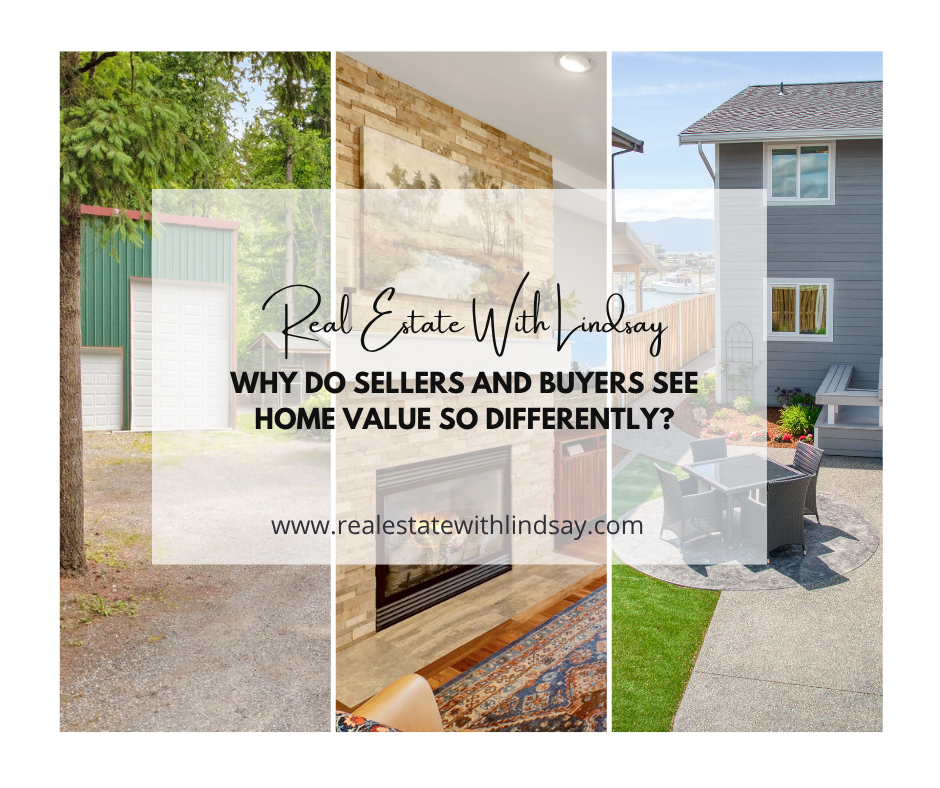
Sellers and buyers often see home value differently because they are looking at the same property from completely different positions. A seller naturally sees the home they have owned, maintained, improved, and lived in. A buyer compares that home to every other option available and asks what they are willing to pay for it today.
When I talk about value with a seller, I understand why their starting point is personal.
They may be thinking about what they paid for the house, how much they have spent on improvements, how many years they have lived there, or how much they need from the sale to make their next move work.
All of those things matter to the seller.
But they do not necessarily determine what the next buyer will pay.
That is where the disconnect often starts. The seller is evaluating the home partly through ownership. The buyer is evaluating it as a choice.
Those are very different perspectives.
A buyer does not know what the kitchen looked like before you remodeled it. They do not know how difficult it was to replace the roof, improve the yard, or finish a project you have been working on for years.
They see what is there now.
More importantly, they see it next to other homes they could buy.
That comparison may include condition, location, layout, lot, updates, needed repairs, monthly payment, and the compromises involved with each property.
The buyer usually isn't asking, “How much has the seller invested in this house?”
They are asking, “What else can I get for this amount of money?”
That distinction explains a lot.
One of the easiest ways sellers overestimate value is assuming money spent on the house should come back dollar for dollar when it sells.
I understand the logic.
If you spent $30,000 improving something, it is natural to feel that the property should now be worth $30,000 more.
But buyers do not reimburse sellers for projects.
They decide how much the finished property is worth to them compared with their alternatives.
Sometimes an improvement does add meaningful value. Sometimes it makes the home easier to sell without increasing value by the full cost. Sometimes it solves a problem buyers would otherwise discount heavily. And sometimes the seller simply chose something they wanted and enjoyed, but the next buyer does not value it nearly as much.
That is why I separate what something cost from what it contributes to the property in the current market.
I use the same reasoning when I help sellers decide whether preparation spending is actually removing an obstacle rather than simply creating a return on investment.
There is another difference that is easy to miss.
A seller may look around the house and see everything that has been done.
New flooring. Updated bathrooms. Landscaping. Appliances. Paint. A finished space that used to be unfinished.
A buyer may appreciate all of that. But once those improvements are part of the house, the buyer does not necessarily assign a separate price to each one.
Sometimes the improvement simply brings the property up to the level the buyer expected at that price.
That can be frustrating for sellers because the work was real and the money spent was real. But market value is not an accounting exercise.
The buyer is evaluating the whole property, not paying back an itemized list of improvements.
Sellers tend to focus on what has already been improved.
Buyers often focus just as much on what has not.
That dated bathroom you have gotten used to may be one of the first things a buyer notices. The roof you know still has some life left may feel like an upcoming expense to someone who just spent most of their available cash buying the house.
And buyers do not always subtract the exact cost of the work.
They may also factor in inconvenience, uncertainty, time, and the possibility that the project becomes more complicated than expected.
This is one reason sellers and buyers can be surprisingly far apart even when both are looking at the same facts.
The seller may think, “That only costs $10,000 to fix.”
The buyer may be thinking, “I do not want to deal with that at all.”
Those are not the same calculation.
This is one of the harder distinctions in real estate.
A seller may need a certain amount from the sale because of a mortgage balance, the purchase of another home, moving costs, debt, or another financial goal.
That number is important when deciding whether selling makes sense.
It does not automatically become the home's market value.
A buyer is making a separate decision based on what the property is worth to them relative to other available choices and their own financial limits.
If the seller needs $800,000 and the market response supports $750,000, the seller's need does not make the house worth $800,000.
That does not mean the seller has to accept $750,000. It may mean selling right now won't accomplish what they need it to.
I would rather identify that problem before listing than try to solve it by choosing a price the market is unlikely to support.
There is a natural temptation to think that starting higher gives a seller room to negotiate.
Sometimes it can.
But an asking price does not convince buyers that a property is worth more than the alternatives they are seeing.
Buyers react to the combination of price and property.
If the house feels well positioned, they may act quickly. If it feels expensive relative to what else they can buy, they may keep looking.
That is why pricing is less about selecting the number a seller would like to receive and more about understanding how buyers are likely to compare the property once it is exposed to the market. I explain that more fully in Why Overpricing Your Home Actually Costs You Money.
It is also important not to talk about “the buyer” as though every buyer sees value exactly the same way.
They do not.
One buyer may care deeply about an updated kitchen. Another may prefer the less expensive house and remodel it themselves.
One may value a large shop, acreage, or an unusual floor plan. Another may see those same features as unnecessary.
A property does not need to appeal equally to everyone.
But the more specific the property's appeal, the more important it is to understand who is likely to value those features and whether enough buyers are willing to pay for them.
That is where value becomes more nuanced than simply adding up square footage and improvements.
Before a home is listed, everyone has an opinion about what it is worth.
The seller has one. I have one. Buyers may have several.
Once the property is exposed to the market, those opinions start producing actual information.
Are buyers scheduling showings? Are they coming back for a second look? Are offers being written? Are buyers consistently choosing competing properties instead?
That response matters.
It does not mean the first buyer who dislikes the house determines its value. Individual buyers can be wrong for a property.
But when the same message keeps showing up in buyer behavior, I pay attention.
The market isn't always telling us what a seller wants to hear, but ignoring the response usually doesn't improve the outcome.
When sellers and buyers disagree about value, I do not think the useful question is simply, “Who is right?”
I want to understand why they are apart.
Is the seller giving too much weight to what they spent?
Is the buyer discounting a feature another buyer may value?
Are we comparing the house to the right competing properties?
Is condition affecting the buyer's perception more than expected?
Is the price requiring buyers to overlook too many compromises?
Or is the seller's expectation reasonable, but we simply have not reached the right buyer yet?
Those questions lead somewhere.
Arguing that a home “should” be worth a certain amount usually does not.
The goal is to understand what buyers are responding to, what is actually creating value, and whether the seller's expectations and the market can realistically meet.
Because buyers are purchasing the finished property, not reimbursing you for the cost of individual projects. An improvement may add value, remove an objection, improve condition, or simply meet what buyers already expect at that price.
Not necessarily. Individual buyers may value a property differently, but that does not mean they are objectively wrong. The more useful question is whether the broader market is responding consistently to the home's price, condition, features, and competition.
Your financial needs should absolutely factor into whether selling makes sense for you. But they do not determine what buyers will pay for the property. If the likely market value does not support the amount you need, I would want to know that before you make plans around the sale.
Because buyers are not evaluating only the dollar amount. They may also be considering uncertainty, inconvenience, available cash after closing, and whether they want to take on a project at all.
Yes. Certain features can be much more valuable to one buyer than another. I would still be careful about assuming that one particularly motivated buyer will appear and pay a premium that the broader market does not support.
I would start by looking at the property the way a buyer will: against competing homes, recent sales, condition, features, needed work, and the compromises involved at the asking price. Once the house is on the market, actual buyer behavior gives us another layer of information that should not be ignored.
If you want to talk through what buying or selling actually looks like for your situation, I'm always open to that conversation. No pressure. Just straight answers.
Lindsay Rohweder is a Managing Broker and REALTOR® with RE/MAX Whatcom County, serving Whatcom County and surrounding areas. She specializes in helping buyers and sellers navigate real estate with honest advice, clear communication, and practical strategies backed by local market knowledge. Whether working with first-time buyers, acreage properties, estate sales, or luxury homes, Lindsay's goal is to help clients make confident decisions based on facts, not pressure or headlines.
When I help someone evaluate home value, I focus on the difference between what matters to the owner and what the next buyer is actually being asked to pay for.

I’m a Managing Broker and real estate agent with RE/MAX Whatcom County, serving buyers and sellers throughout Whatcom County, Washington, including Bellingham, Ferndale, Lynden, Birch Bay, Blaine, S....
How a 16-Month Real Estate Battle Changed the Way Washington Homes Come to MarketInside the new NWMLS First Look option and what it means for buyers and sellersBy Sean JeffreyRE/MAX Whatcom
Data Centers Are Moving Closer to Homes. What Does That Mean for You?Data centers probably weren’t something most buyers or sellers expected to think about when making a real estate decision
Short AnswerYou can sell a Whatcom County home after you have moved out of state. The harder part is not signing paperwork remotely. It is making good decisions about a property you cannot simply
Short AnswerI would market a horse or acreage property by making it easy for the right buyer to understand what the entire property actually offers, not just how the house looks. That means showing
 Claims of Copyright Infringement & Related Issues
Disclaimer:
IDX information is provided exclusively for consumers' personal noncommercial use,
that it may not be used for any purpose other than to identify prospective properties
consumers may be interested in purchasing, that the data is deemed reliable but is not
guaranteed by MLS GRID, and that the use of the MLS GRID Data may be subject to an end user
license agreement prescribed by the Member Participant's applicable MLS if any and as amended
from time to time.
The information contained in this listing has not been verified by REMAX Whatcom County, Inc. and
should be verified by the buyer.
The database information herein is provided from and copyrighted by the
Northwest Multiple Listing Service (NWMLS). NWMLS data may not be reproduced or
redistributed and is only for people viewing this site. Listings that feature the
"three tree" icon are provided courtesy of NWMLS. All information provided is deemed
reliable but is not guaranteed and should be independently verified. All properties
are subject to prior sale or withdrawal. All rights are reserved by copyright.
Based on information submitted to the MLS GRID as of September 22, 2026 10:08 PM UTC. All data is obtained
from various sources and may not have been verified by broker or MLS GRID.
Supplied Open House Information is subject to change without notice.
All information should be independently reviewed and verified for accuracy.
Properties may or may not be listed by the office/agent presenting the information.
Some IDX listings have been excluded from this website.
Copyright 2026 Northwest Multiple Listing Service. All rights reserved.
